1. Before getting the fish: is your aquarium ready?
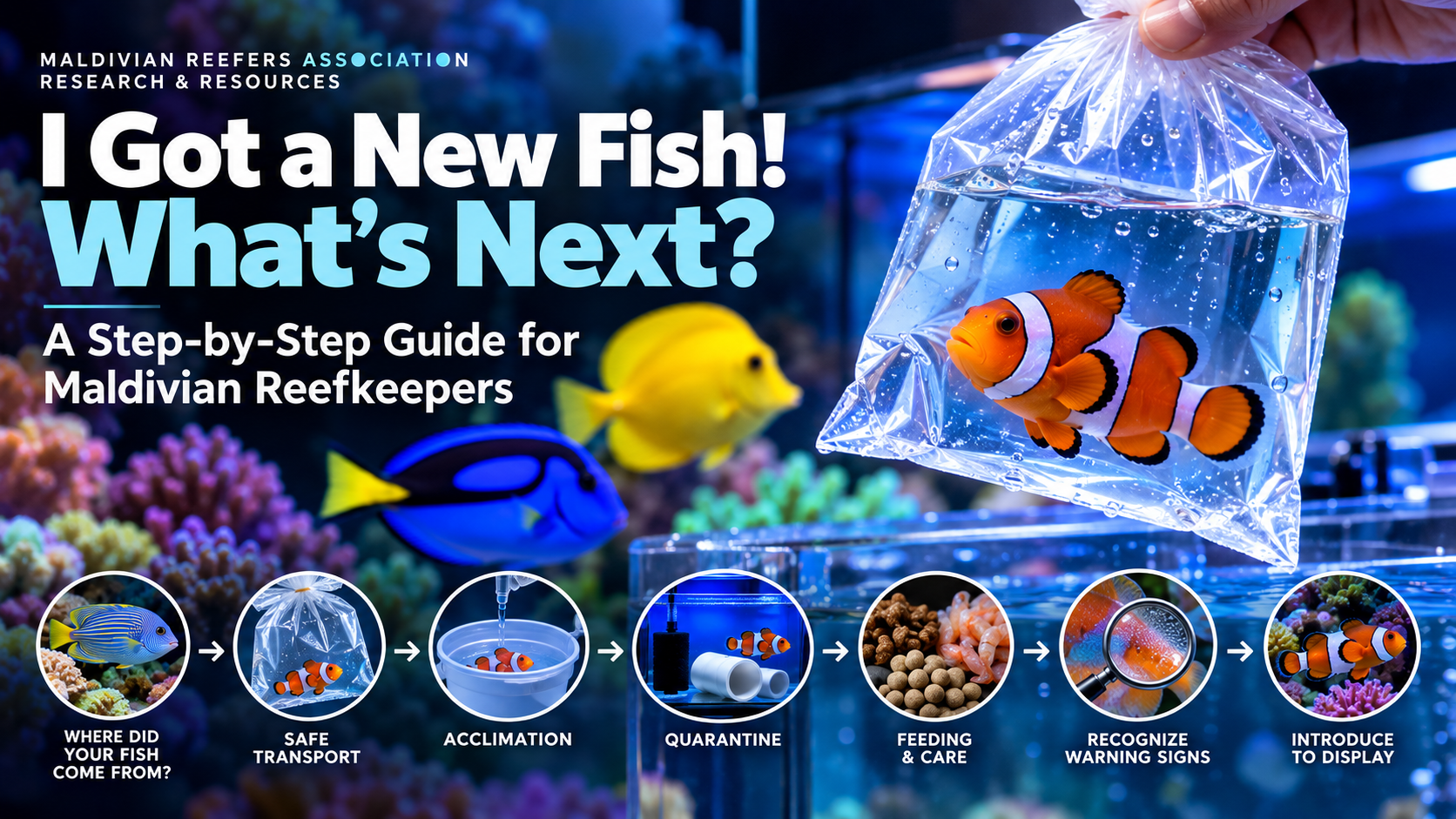
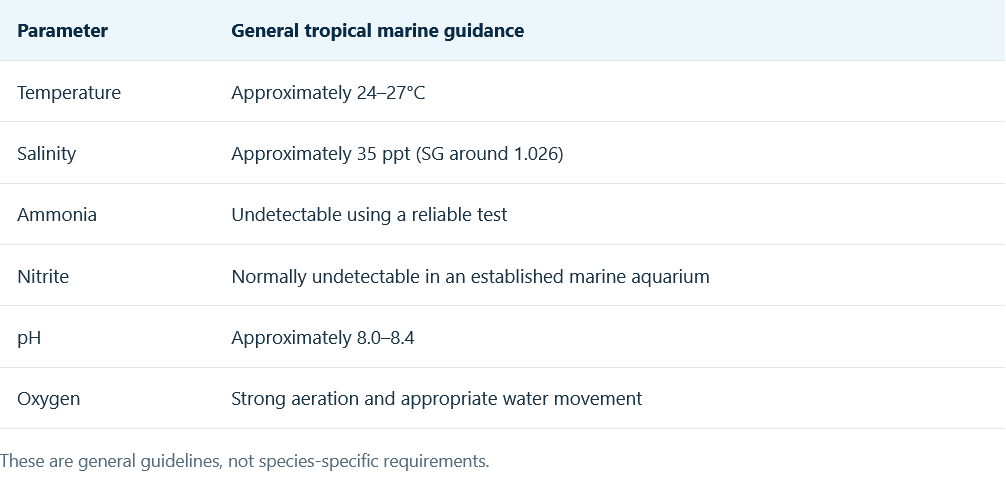
Research the species' adult size, diet, swimming needs, temperament and compatibility. A small fish may grow into an animal that requires a much larger tank. Ensure the aquarium is fully cycled and capable of processing fish waste before adding livestock.
2. Know where your fish came from
A. Wild-caught fish from Maldivian waters
Local reef fish collection for aquarium keeping is permitted in the Maldives, while coral collection is prohibited. Applicable protected-species, protected-area and collection-method rules must still be respected. Newly collected fish may be encountering captivity and prepared foods for the first time. Handle them gently, provide hiding places, identify their natural diet and quarantine carefully.
B. Fish from a friend's aquarium
These fish may already eat prepared food and tolerate aquarium conditions, but a healthy appearance does not guarantee freedom from parasites. Ask about recent additions, illnesses, treatments, feeding habits and aggression. Quarantine remains recommended.
C. Imported fish from abroad
Imported fish may have endured long transport, oxygen depletion, temperature changes and accumulating ammonia. Their shipping water can become unsafe after a bag is opened. Prepare an appropriate quarantine tank before opening bags and avoid prolonged acclimation in polluted transport water.
3. Transport your fish safely
Use clean, fish-safe bags or containers with adequate water and oxygen.
Protect fish from direct sun and excessive heat, especially during boat or motorcycle transport.
Use insulated boxes for longer journeys and avoid overcrowding.
Do not place sharp rocks or coral rubble in transport bags.
Minimize handling and time out of water.
4. At home: don't immediately release the fish
Dim the lights and assess the fish's breathing, swimming and condition. Check transport-water salinity if feasible and compare it with the prepared quarantine aquarium. Equalize temperature without leaving the fish unnecessarily long in deteriorating shipping water. Never pour transport water into the aquarium.
5. Acclimate according to transport conditions
Short local transfer, reasonably clean water
Keep the fish in a quiet, temperature-controlled area.
Check temperature and salinity differences.
Adjust salinity carefully if needed, avoiding sudden large changes.
Move the fish gently to quarantine using a suitable container.
Discard the transport water.
Long-distance imported shipment
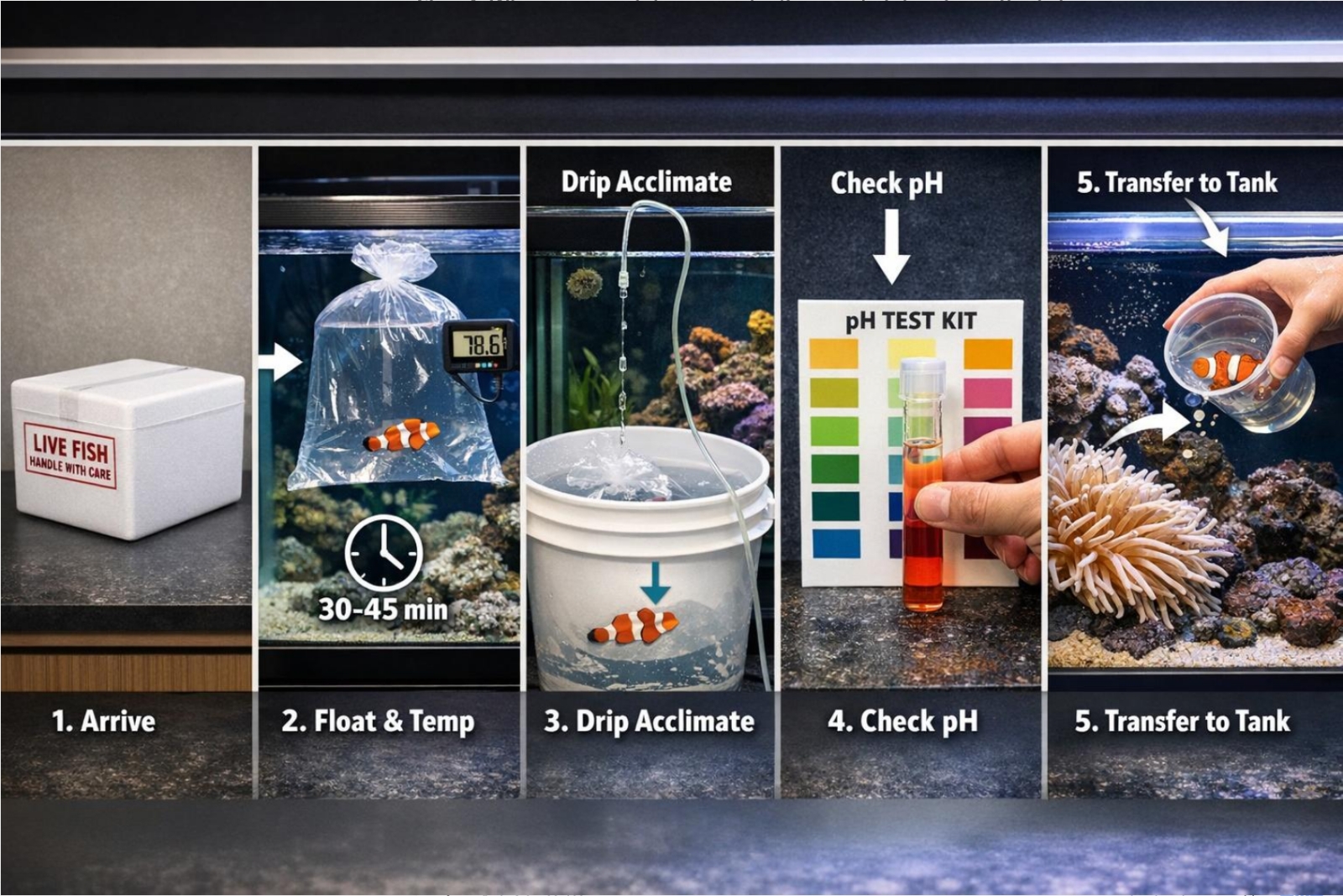
Do not automatically drip-acclimate for an hour or more. After a sealed bag opens, changing pH can make accumulated ammonia more toxic. Where possible, prepare quarantine water matched closely to shipping temperature and salinity, then transfer promptly and carefully using a protocol appropriate to the fish and water conditions.
Important: There is no universal acclimation duration. The safest method depends on the transport duration, ammonia exposure, temperature and salinity difference.
6. Quarantine: protect your existing fish
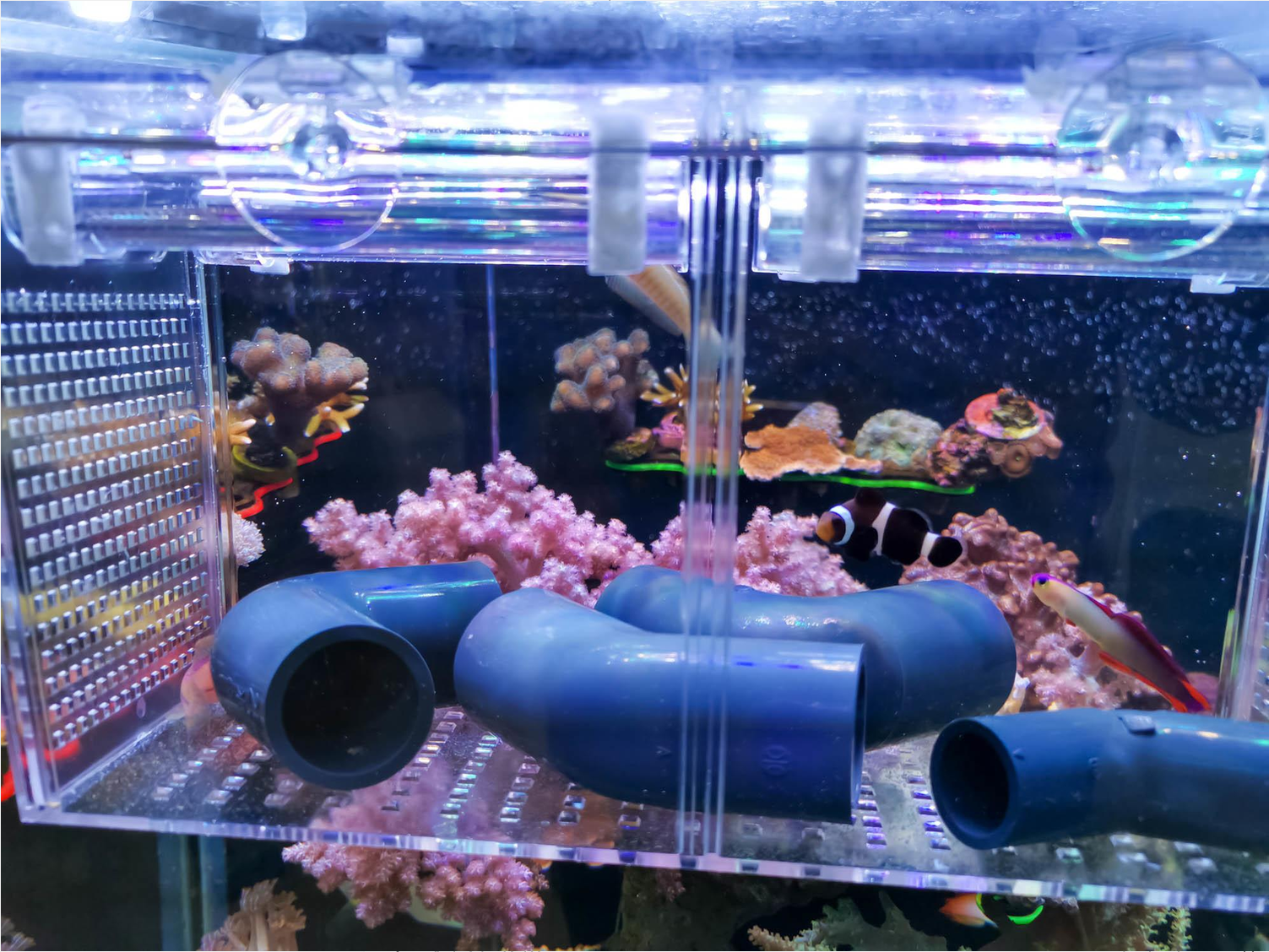
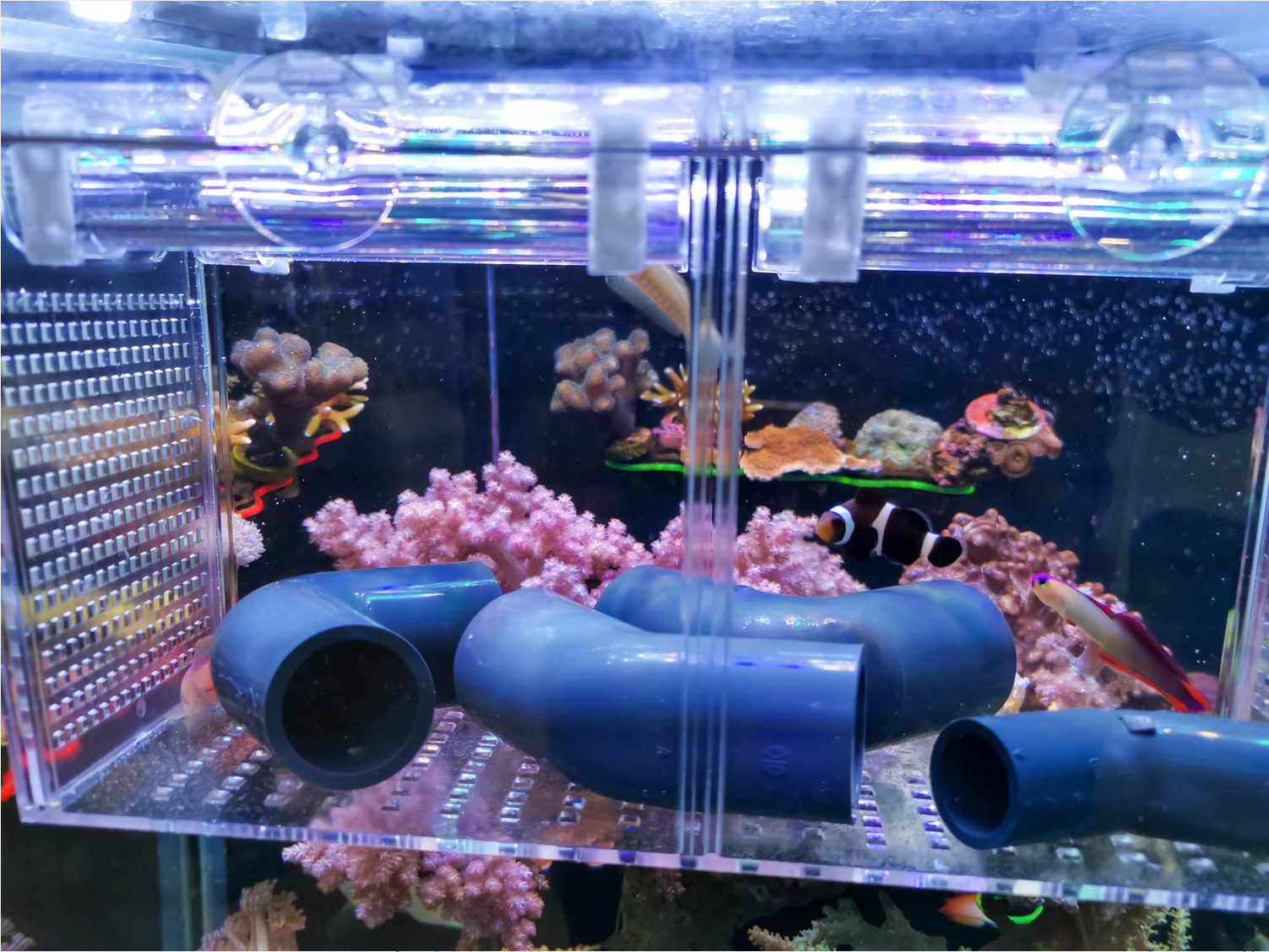
Use a separate, appropriately sized aquarium with established biological filtration, strong aeration, secure cover, temperature control as needed, and inert hiding places such as PVC fittings. Monitor ammonia closely. A four-to-six-week observation period is a common starting point, but observation alone cannot guarantee parasite-free fish; the appropriate period depends on species, symptoms and any treatment protocol.
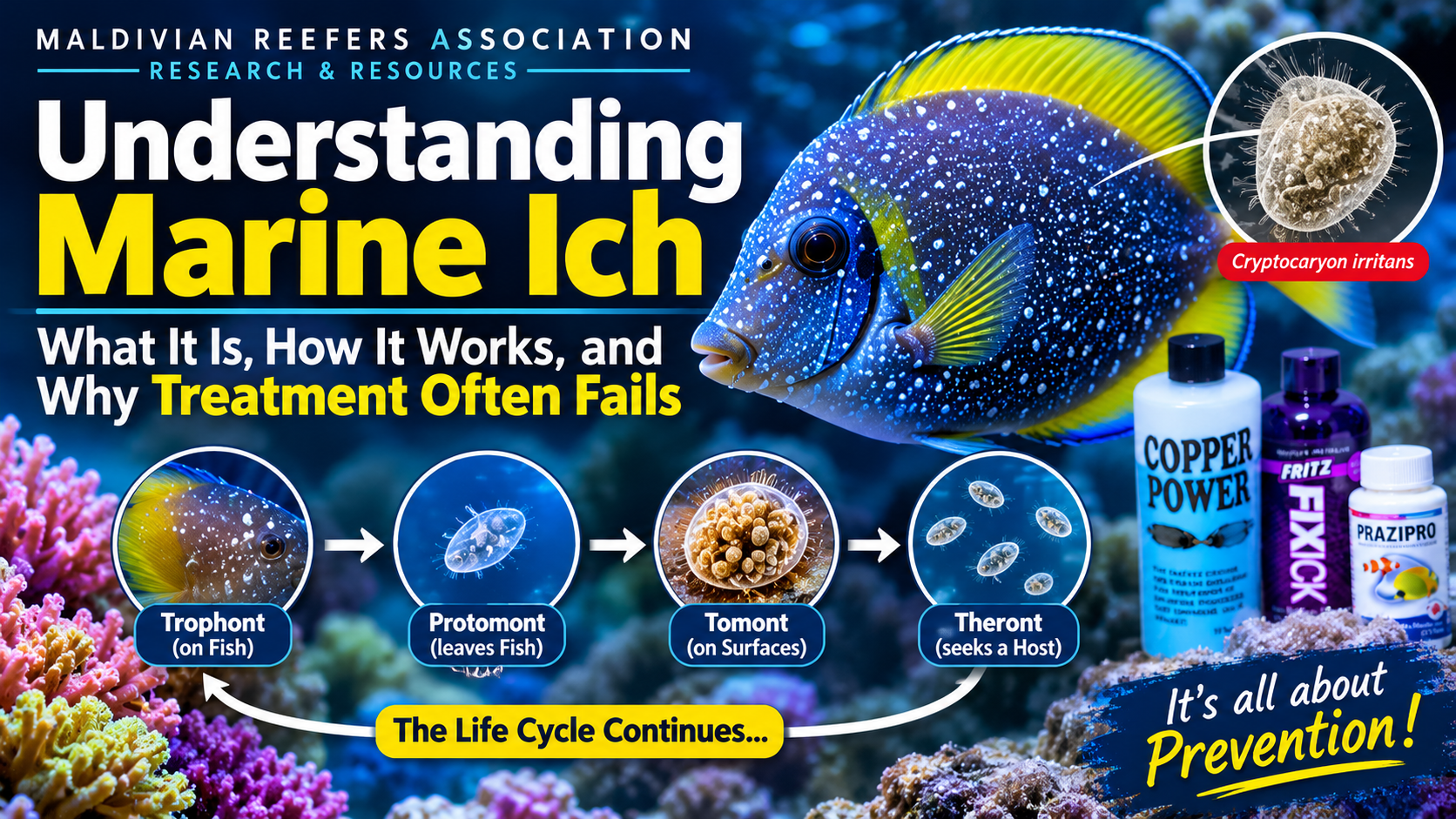
Watch for Marine Ich, marine velvet, Brooklynella, flukes and bacterial infections. Use medication only when supported by an appropriate diagnosis or a deliberate preventive protocol. Copper requires correct testing and dosing and must never be used in a reef display with corals or other sensitive invertebrates.
7. The first 24 hours
Keep lighting subdued and disturbances minimal. Watch breathing, balance, swimming and hiding behavior. Offer a small amount of suitable food once the fish settles and remove leftovers. If breathing is rapid, immediately assess oxygenation, ammonia, temperature and salinity and seek qualified fish-health guidance.
8. Helping a wild-caught fish eat
Identify its natural diet before choosing food. Depending on species, marine algae, frozen mysis, small crustaceans or specialist foods may be appropriate. Offer small portions and transition to prepared foods gradually where possible. Some fish are specialized feeders and may never thrive on generic pellets.
9. Recognize warning signs
White spots or scratching: possible external parasites, including Marine Ich.
Rapid breathing: urgent concern; possible oxygen or water-quality problem, gill parasites or marine velvet.
Peeling skin or excessive mucus: possible Brooklynella or other irritation/infection, particularly concerning in clownfish.
Refusal to eat, loss of balance or lethargy: investigate promptly rather than adding multiple medications blindly.
Not every sick fish has Ich. Accurate diagnosis matters: different diseases require different treatments, and combining medications indiscriminately can cause harm.
10. When can the fish enter the display aquarium?
Only after an appropriate quarantine and any necessary treatment are complete, the fish is eating consistently, maintaining body condition, swimming normally and showing no unresolved signs of illness. Check compatibility with existing fish. An acclimation box can help manage aggression; match water conditions and transfer without quarantine water.
11. The first seven days in the display
Monitor feeding, hiding, breathing and interactions with established fish. Ensure the newcomer can access food and shelter without constant harassment. Keep water parameters and lighting stable and continue checking for signs of disease.
Quick checklist
☐ Research species, adult size, diet and compatibility.
☐ Confirm responsible, lawful sourcing and applicable restrictions.
☐ Prepare a fully cycled quarantine tank.
☐ Check temperature, salinity, ammonia and aeration.
☐ Transport safely and avoid heat exposure.
☐ Choose acclimation based on shipping conditions.
☐ Never add transport water to the aquarium.
☐ Monitor breathing, feeding and behavior.
☐ Complete appropriate quarantine and treatment if needed.
☐ Introduce into the display carefully and watch for aggression.
A special responsibility for Maldivian reefkeepers
Our reefs are an extraordinary natural resource. Wild fish should never be treated as disposable simply because they are locally accessible. Respect protected species and areas, avoid harmful capture practices, and only keep fish whose long-term needs can be met. Never release aquarium fish into the ocean, even if originally collected locally: captivity can expose them to pathogens and organisms that should not enter natural ecosystems.
Conclusion: a new fish is a responsibility
Successful reefkeeping begins before the fish enters the aquarium. Preparation, safe transport, appropriate acclimation, quarantine, feeding and observation are the foundation of a healthy display. The best time to prevent disease is before a new fish joins your existing fish.